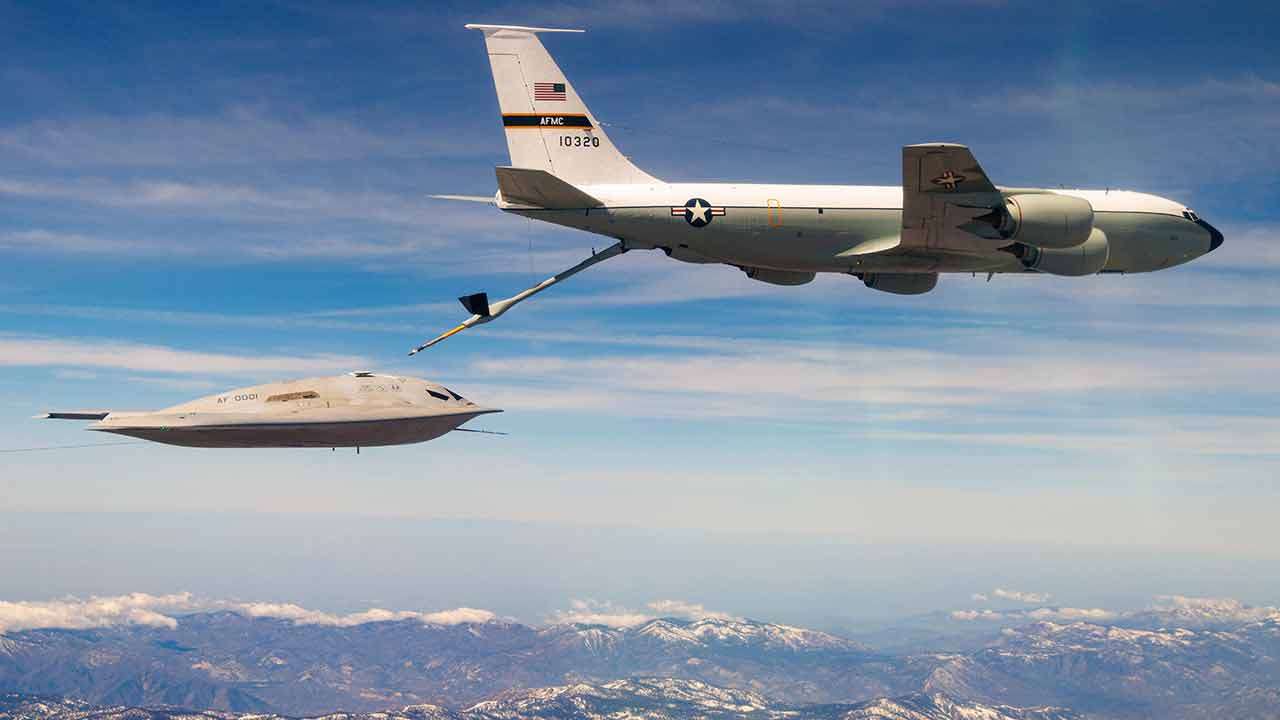
The B-21 Raider has just achieved a major milestone that reinforces its strategic weight within the future U.S. bomber force. The new stealth bomber successfully conducted aerial refueling with a KC-135 Stratotanker, in what is being seen as another decisive step toward accelerating its operational maturity and solidifying the delivery of the U.S. Air Force’s new long-range strike capability.
The test strengthens the perception that the program is entering an increasingly robust phase, marked by rapid progress and a clear focus on bringing into service a platform capable of operating in high-threat environments. For the Air Force, the B-21 is not just another bomber: it is viewed as a central element of the new U.S. architecture for deterrence and power projection.
According to U.S. officials, the program has already become a benchmark for the Department of the Air Force’s new military acquisition approach, based on digital engineering, integration from the outset, and greater speed in delivering real capability to the warfighter. The assessment is that each new test increases confidence in a system that is already demonstrating a high level of maturity.
Another factor amplifying the B-21’s impact is its fuel efficiency. The aircraft has been described as the most fuel-efficient bomber ever built, consuming far less fuel than older models. In practice, that means less strain on the refueling fleet, more freedom in force composition, and greater flexibility for operations across complex and distant theaters.
For Air Force leadership, that efficiency is not just a logistical gain, but a direct factor in lethality. By reducing dependence on tanker aircraft, the B-21 expands strategic employment options and frees up resources to sustain other joint airpower missions.
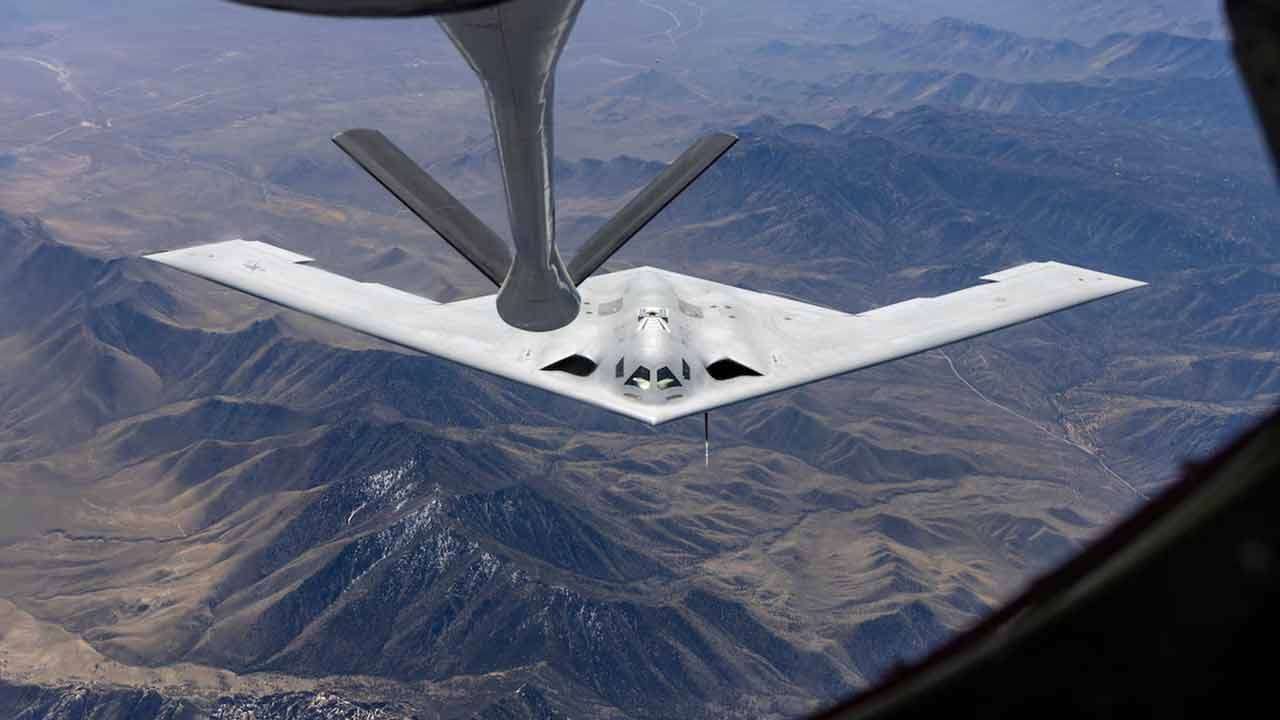
Aerial refueling capability is essential to the Raider’s concept. The bomber was designed to ensure long-range penetrating strike, global power projection, support for deterrence, and rapid-response capability in any region of the world. In other words, it is a platform built to operate wherever the United States chooses, whenever it deems necessary.
The B-21 was also designed to operate in highly contested environments and is expected to employ both conventional and nuclear weapons, serving as a flexible and visible component of the U.S. nuclear triad. Its open architecture will also allow new technologies and capabilities to be integrated more quickly, helping the aircraft remain current as threats evolve.
Testing continues at Edwards Air Force Base in California, through a partnership involving the Air Force Test Center, the 412th Test Wing, and Northrop Grumman. The goal is to reduce risk, accelerate system maturation, and move the B-21 closer to operational service as one of the most strategic platforms of the next generation of U.S. military power.
Source and images: U.S. Air Force | Northrop Grumman