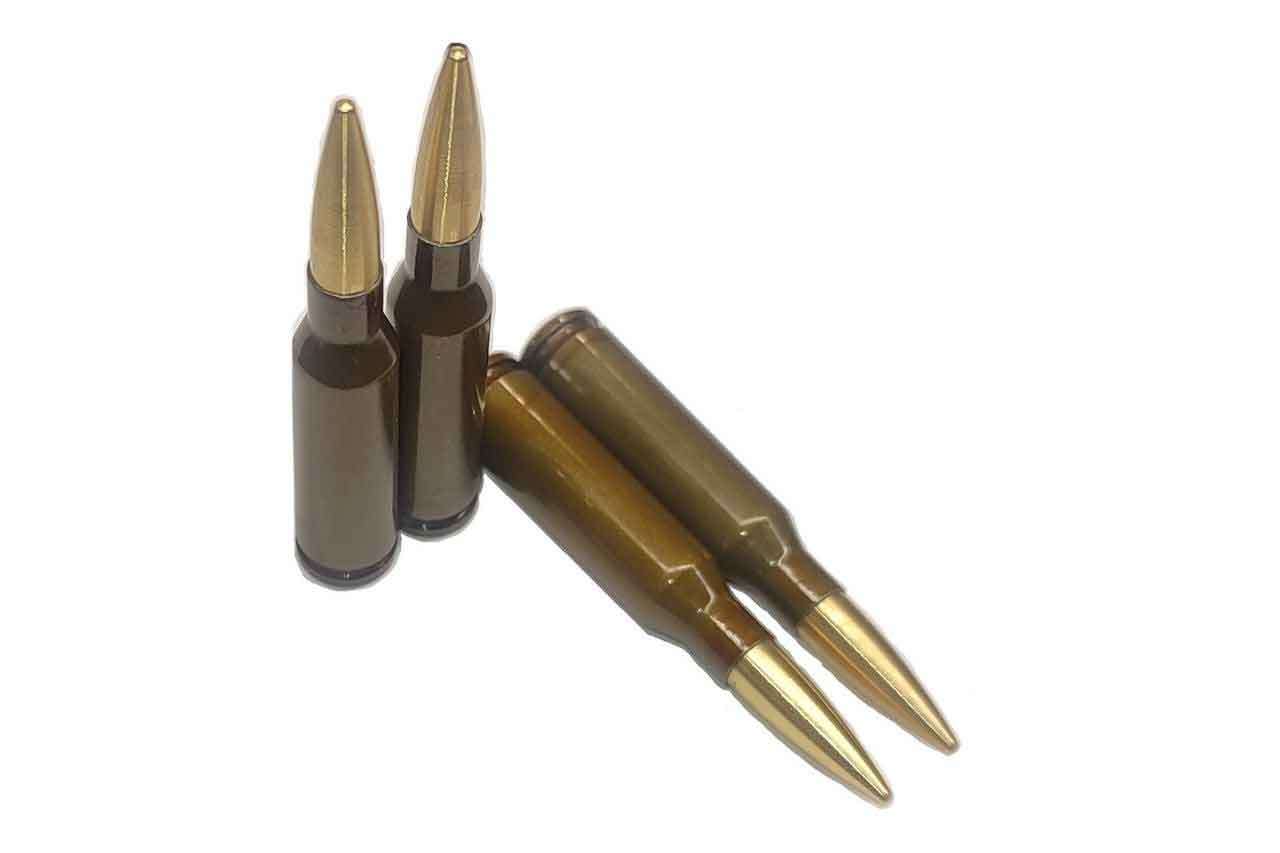
Russian defense conglomerate Kalashnikov announced that it has successfully completed tests of a new high-capacity experimental 5.45 mm round designed to improve efficiency when engaging FPV drones in conflict scenarios.
According to information released by the company, the tests were carried out using the AK-12 rifle in both single shots and burst fire. The evaluation took place in two stages: first against a stationary drone, and then against an aerial target with predefined speed and altitude parameters, simulating a direct approach toward the shooter.
According to Kalashnikov, when the projectile’s elements struck the drone, the impacts caused damage to components such as motors, batteries, electronic boards, and structural parts of the aircraft, leading to its سقوط. [Need fix?]
The company also stated that customer representatives gave positive assessments of the new ammunition’s tactical and technical characteristics, highlighting shot accuracy and performance against aerial targets during dynamic tests.
The development was described as an innovative solution for individual small arms, with a particular focus on the AK-12. The ammunition uses a multi-element ejectable projectile designed to increase the probability of hitting FPV drones in both semi-automatic fire and short bursts.
According to the manufacturer, the internal elements of the round separate in a controlled manner shortly after leaving the barrel, which would contribute to greater external ballistic stability without compromising the weapon’s reliability. The goal is to provide the soldier with a more effective alternative for countering small aerial threats at short range.
Another point highlighted by Kalashnikov is the new round’s compatibility with the 5.45 x 39 mm standard already used by the AK-12. This means that the conventional 30-round magazine can be used without modification, allowing the operator to choose between loading the magazine entirely with the new ammunition or mixing it with conventional cartridges depending on operational needs.
At present, the conglomerate says it is working on refining the project and developing the technology required for future serial production of the ammunition.
The initiative reflects the growing adaptation of the defense industry to the rise of FPV drone threats on the battlefield, a factor that has been influencing both the development of specialized systems and the modernization of individual weapons.
Source and images: Kalashnikov Concern / Telegram @kalashnikovnews