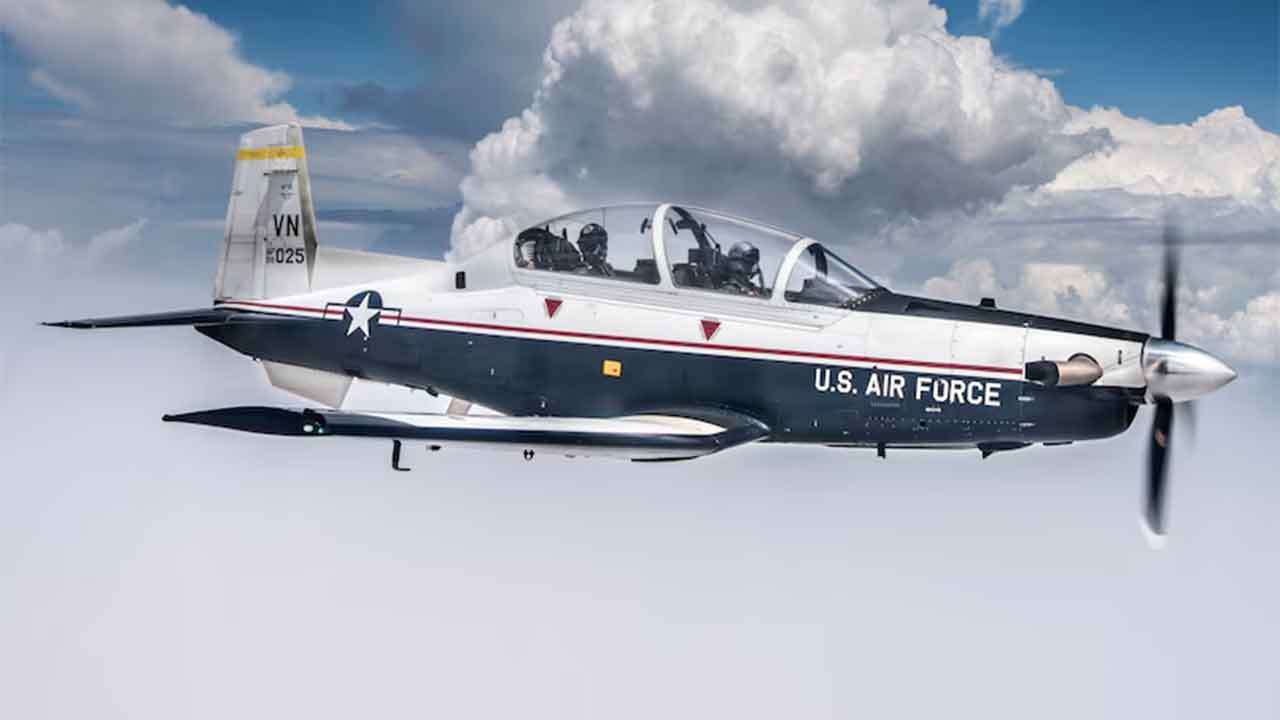
With aerobatic capability, an advanced cockpit, and a high-performance turboprop engine, the T-6A Texan II remains the main initial training platform for U.S. Air Force and U.S. Navy pilots.
The T-6A Texan II has established itself as one of the most important aircraft in the American military aviation training structure. Used in the joint training of pilots from the United States Air Force and the U.S. Navy, the model is responsible for preparing students in the fundamental flying skills before advancing to more complex tracks, such as fighter, bomber, transport, turboprop aviation, and helicopters.
Produced by Raytheon Aircraft, the T-6A is the military version derived from the Beech/Pilatus PC-9 Mk II. The aircraft was designed to offer an efficient transition between basic training and more demanding phases of operational instruction, combining consistent performance, modern avionics, and safety features suited to the military environment.
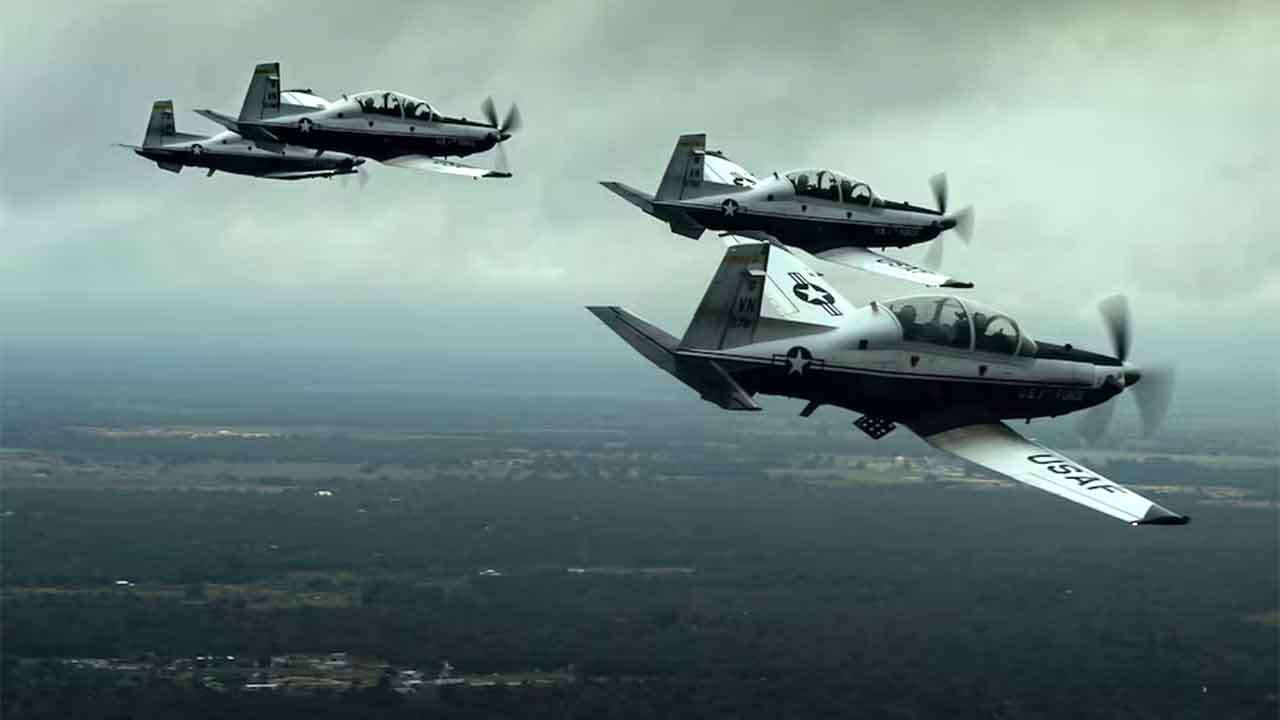
The trainer is equipped with a Pratt & Whitney Canada PT6A-68 engine capable of delivering 1,100 horsepower. This configuration ensures a strong power-to-weight ratio and allows the T-6A to achieve an initial climb rate of 3,100 feet per minute, as well as reach 18,000 feet in less than six minutes. Its top speed reaches 320 miles per hour, with an operational ceiling of 31,000 feet and a range of 900 nautical miles.
One of the T-6A’s distinguishing features is its set of resources aimed at advanced training from the earliest phase. The pressurized tandem cockpit, with instructor and student in interchangeable positions, allows flexibility in training. The model also features an ejection seat, anti-G system, a canopy resistant to bird strikes at speeds of up to 270 knots, and an avionics package with sunlight-readable displays.
In addition, the Texan II is fully aerobatic, a characteristic that broadens the preparation of future pilots for more demanding operational scenarios. This combination makes the aircraft an essential platform for standardizing initial training within the United States’ joint flight instruction program.
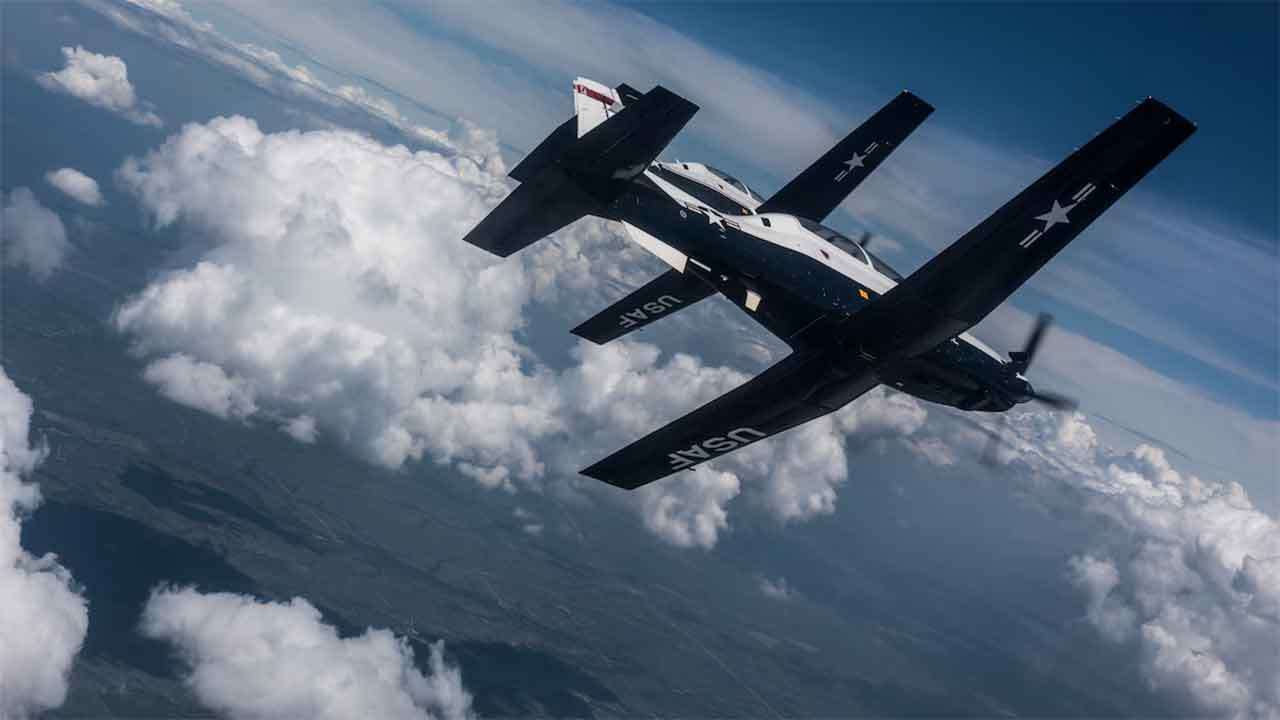
The development of the T-6A is linked to the Joint Primary Aircraft Training System (JPATS), a U.S. Department of Defense initiative aimed at modernizing primary pilot training. Although the program was identified as early as 1989, Raytheon received the acquisition and support contracts on February 5, 1996. The first operational aircraft arrived at Randolph Air Force Base, in Texas, in May 2000, while the full-rate production contract was awarded in December 2001.
Since then, the T-6A has been used in the training of new aviators at different air bases. Instructor training began at Randolph in 2000, and the joint primary training program officially began in October 2001 at Moody Air Force Base, in Georgia. Today, the aircraft operates at bases such as Columbus, in Mississippi, Vance, in Oklahoma, as well as Laughlin and Sheppard, in Texas.
With 446 units in active inventory and an estimated unit cost of US$ 4.272 million, the T-6A Texan II continues to be one of the pillars of U.S. military air training, remaining relevant even after production for the Air Force ended in 2010.
General characteristics of the T-6A Texan II
Primary function: entry-level basic trainer for joint pilot training
Manufacturer: Raytheon Aircraft Co.
Engine: Pratt & Whitney Canada PT6A-68 turboprop, 1,100 hp
Wingspan: 10.19 meters
Length: 10.16 meters
Height: 3.23 meters
Speed: 320 mph
Empty weight: 2,955 kg
Operational ceiling: 9,448 meters
Range: 1,667 km
Crew: two, student and instructor
Armament: none
Entry into service: May 2000
Unit cost: US$ 4.272 million
Inventory: 446 aircraft
Source and images: United States Air Force. This content was created with the help of AI and reviewed by the editorial team.