A new system allows U.S. Navy submarines to launch and recover autonomous underwater vehicles without surfacing, expanding surveillance, undersea warfare, and mine detection missions with greater stealth.
L3Harris Technologies has announced the delivery of a new autonomous underwater capability for U.S. Navy submarines, in a development that could significantly expand stealth operations in the undersea domain.
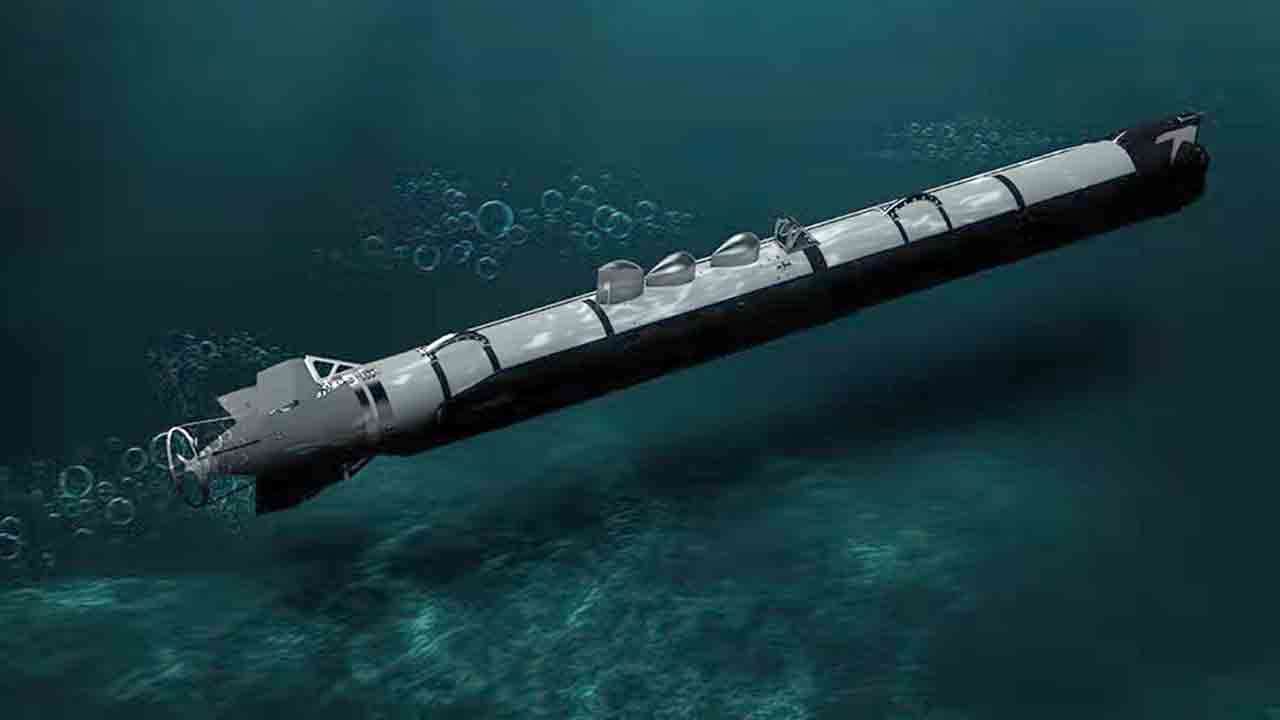
The company received a contract from the Defense Innovation Unit (DIU) to provide the Torpedo Tube Launch and Recovery (TTLR) system, a technology that enables the launch and recovery of Iver4 900 autonomous underwater vehicles directly through submarine torpedo tubes.
In practice, this new capability allows submarines to carry out intelligence, surveillance, reconnaissance, mine detection, and seabed warfare missions without needing to surface or expose crews to unnecessary risk.
According to L3Harris, the system has already been validated by the navies of the United States and allied countries. The company says it is the first solution to successfully launch and recover AUVs from a submarine, marking an important step for persistent operations in the submerged environment.
According to Nino DiCosmo, President of Maritime, Space & Mission Systems at L3Harris, TTLR is not a promise for the future, but a direct answer to current operational needs. The goal is to give commanders greater flexibility in submarine missions while preserving one of these vessels’ most important assets: stealth.
Another highlight of the system is its modular architecture, which, according to the company, makes it possible to increase the operational capacity of existing submarines without the need to build new platforms. This could reduce costs and speed up the integration of the technology across the fleet.
L3Harris also said that TTLR incorporates the first lithium-ion battery technology for AUVs approved by the U.S. Navy and U.S. naval aviation, which is expected to ensure longer missions and allow rapid battery replacement for continuous operations.
In addition, the system’s compatibility with different submarine classes and allied platforms strengthens the concept of integration between crewed and uncrewed systems, something that is central to the U.S. Navy’s strategic vision. The company also linked the project to the cooperation envisioned under AUKUS Pillar 2, aimed at the joint development of advanced technologies among allies.
With this, L3Harris is taking a prominent position in one of the most sensitive areas of modern naval warfare: the combination of submarine stealth with long-endurance autonomous systems at sea.
Source and image: L3Harris